domingo, 3 de abril de 2011

More Photos

Escuela de Padres

Harvesting Potatoes
Reading Skipping Stones Magazine

Good Morning Vietnam!

Lately a big shift has taken place in my experience living in Peru. I’m beginning to feel more and more comfortable here in the community of Amashca, a small town of 1,200 people in the high altitude of the Andes Mountains. Life isn’t always easy here however, and there are moments when the sites of some of the “ugly” begin to grind on my western trained psyche. These are the familiar sites of underdevelopment: trash in the landscape, small children playing with broken toys (or just a rubber tire), unsupervised for long stretches, animal feces everywhere you go, dark and dingy kitchens with open fires, and then there’s you, passing through, taking it in, but also not taking it in, because it’s raw, and a little scary.

Why is it scary? Our purpose for being here is an attempt to make shifts not just within our selves, but in the world that surrounds us. What we see, the sometimes garish scenes of poverty, is representative of what any idealist aims to change. Slowly, it becomes clear, that most of this will remain, at least during the two years we are present in these communities. The shifts we hope to make are mostly invisible to the eye, and perhaps, that is what matters most.

There is one family, with which I am becoming closer, I go and visit their two room home (one part living/sleeping area, one part kitchen) frequently to chat over soup, play with their four kids, or just smile and say hello. The father of this family, Francisco, is a mild mannered, thin man. He and his wife Esperanza dedicate their lives to the fields, planting potatoes, oca (another tuber), corn, peas, and other crops. They have one milking cow, a few bulls, pigs, and burros, and when there is milk Esperanza makes queso fresco to sell. Their kids, age four, ten, thirteen and fifteen, help out with tasks after school; this is normal life for them, even the four year old is accustomed to long two hour hikes up to the high slopes where potatoes grow best.

This family has gone through some tribulations, Esperanza had an operation to get her gal bladder removed, and although almost a year has passed still experiences some pain. While generally liked in the community, they lack any important connections in the local municipality, or businesses. Esperanza scans her house, the small adobe structure which utilizes a huge boulder as the far wall, and says, “Look at my house, it’s like this because of my health, that’s were our money has gone.”

But this family is not impoverished of strength and values. This, Francisco makes clear by always insisting I sit down for a meal, that his kids say “hello” and “thank you” and by treating his wife with respect. While Francisco’s understanding of the world revolves most intensely around the pueblo, the crops, the forces of nature, he understands that there are systems of injustice at play that dictate much of his well-being and that of his family; crop prices, controlled by an unfair market system is a piece of the oppressive hand that keeps this family in an uphill struggle. Esperanza’s ill health was met by a discriminatory health system that puts patients like her, indigenous Quechua speakers, on the back burner, only until a medical crisis is their adequate intervention.

To have the ability to share in their lives, and to hear their stories puts a face on all the academic work I did in the past, learning about the “sub-altern,” the more than 2 billion people on the planet living off a few dollars a day. It helps me to understand that life goes on, happy, sad, joyful, tragic, whether you have a bank account or not. But what is striking is the growing awareness, due to changing global information and the shrinking of the planet, that Esperanza and Francisco have of what is out there and unavailable to them and their children, and there is a tinge of grief that comes along with this awareness.

The other day Francisco said to me, “When you go back to your country, tell our story.” I don’t have the ability to eradicate poverty, but I have the ability, and the privilege to observe and bare witness to the lives of those who surround me. And here, thanks to the newest and latest technology am bringing it home as it unravels before me.

"One sees clearly only with the heart, anything essential is invisible to the eye."

-Antoine de Saint-Exupéry

jueves, 27 de enero de 2011

Recent Community Pics

Recycled Art Projects
Rosa and Sayda Celebrating Choclo Sale in the Chacra
My Host Dad Jaime Enjoying Choclo
Kevin's Project
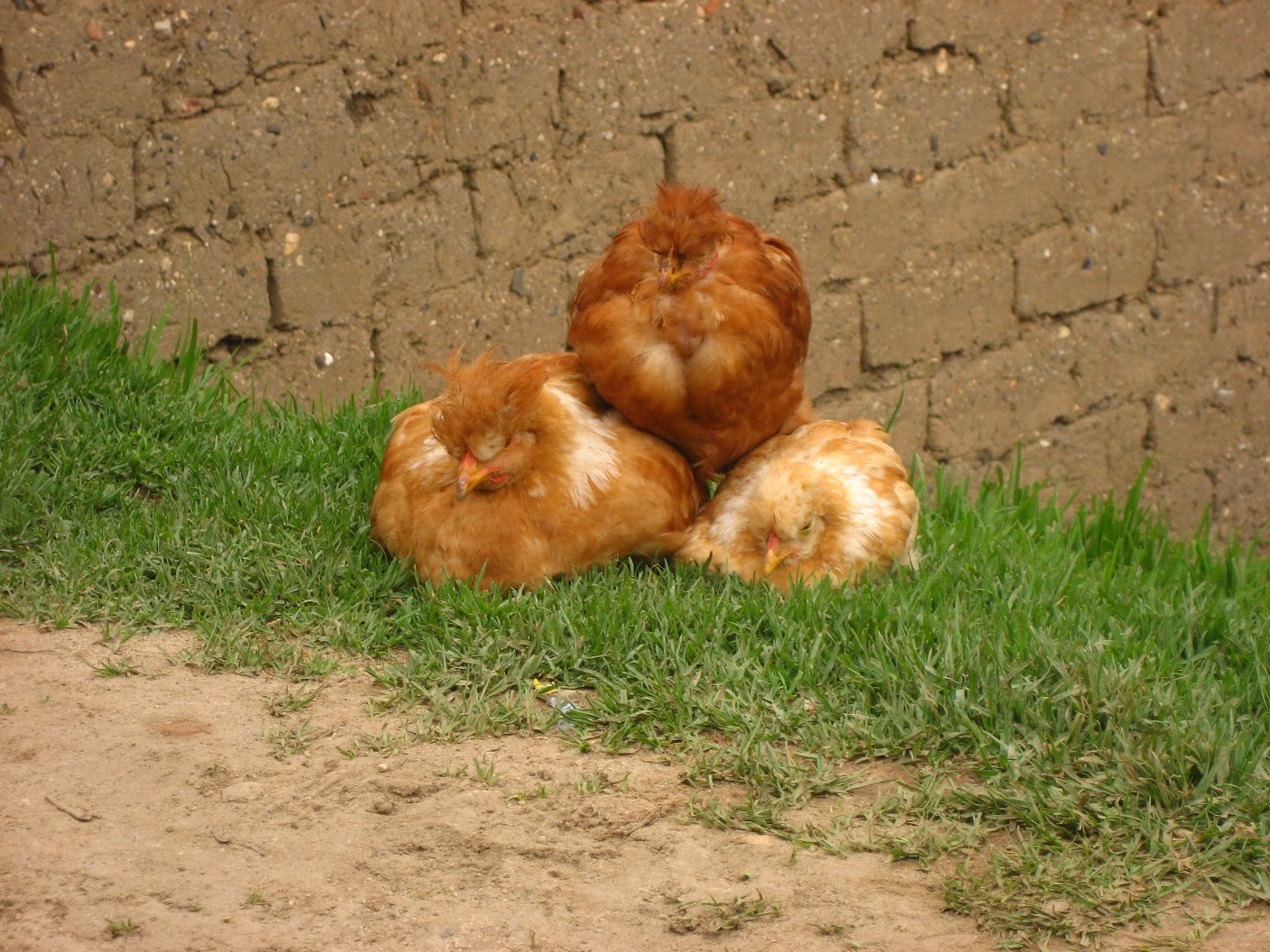
Gratuitous Chicken Pic

Kichwata palanki Huarazchaw

The "Peru 15" girls at Laguna Churup
Lovely Thai Dinner
Me and Verito at Laguna Shallap
Mind Boggling Valley en route to Shallap


Five days of Quechua lessons, and I have a mixture of words, that I'm not quite able to form into sentences, in my head. I am looking forward to taking this new repertoire to the community for some real world practice. In the past few days we have had the opportunity to learn not only the basics of the Quechuan language, but given a window into the culture that surrounds us.
There are two main branches of Quechua in Peru, one is based in Cusco in the South, and the other here in the Cordillera Blanca. In contrast to popular knowledge, it is most likely that Quechua originated in this region, this being supported by the fact that there are multiple sub-branches of the language up in the north, pointing to a longer period of evolution. While Cusco was the seat of power for the Incan empire, the heart of the Quechuan people began to palpitate here, amongst the snow covered mountains. And here we are, a group of US citizens, our job: to integrate into a culture with ancient roots.
As our group of volunteers grows in Ancash, our presence becomes stronger, the variety of experiences grows, and bonds form within the volunteers and their communities. There is an amazing group of individuals dedicating two years to serve in communities near and far. On the other side of the Cordillera Blanca lies another set of mountains known as Conchucos, where over 10 Peace Corps volunteers have recently arrived for the first time since the 1960's. Access to transportation and basic services is very limited, and the terrain is rough by any standards. These volunteers are adjusting to life and work under extremely challenging conditions, beginning a new journey. Witnessing this beginning has provided me with a reaffirmation of our work here, of the potential, whether it's focused on building relationships, or new after school or health programs, those of us engaging in this work are doing our best to engage, create and build a life that matters.
In the space when we can come together as a group we have opportunities to explore a mesmerizing landscape, treking to isolated glacial valleys and lakes, trying to take it all in. Enjoying time with friends has been one of the most rewarding aspects of this experience. Engaging with each other has helped to put it all in perspective, generate understanding, and build a context for this strange adventure-a little clarity amongst the twists and turns.
This entry is dedicated to you, friends, both near and far, thank you.
Elke

lunes, 10 de enero de 2011

Arg...this won't last long, I promise

Things I hate:
when people come into a cafe and don't order anything, oh, just lounging, browsing the lending library, you know, we're on a shoestring travel budget...arg

The combi from this morning, what I sat on did not qualify as a seat, not with a metal bar in my back and a kid sleeping on my arm while the guy next to me coughs up his lung and we lunge through one pot hole after another, arg

"Buenos Dias preciosa/guapa/gringa/etc," I am not your girl, nor will I ever be, leave me alone! All I want is a shower and some breakfast and this guy is leering into my space at 8am, it's too early for this S%$#! Double arg.


Here is my angry face

That's about it, not a long list, I'm sure there's more, but I'll spare you all before you swear off reading this blog ever again.

Thanks for letting me vent,
Elke

domingo, 2 de enero de 2011

Greatness comes in small doses


Another year has passed, we move into the sci-fi sounding 2011-the future is here! Briefly, a Peruvian New Year is not complete, with yellow undergarments, the burning of old clothes (to start fresh), and fireworks-loud ones. I will mention, the countdown did not happen on time-things are usually late, "La Hora Peruana" strikes again. But what I really want to get to, since it is a New Year-the beginning of what will be a full 12 months in this country-follows.

Favorite things about Peru: The giving nature of the people
Peru, being a country experiencing much growth and still lacking many basic services in the rural areas is at times difficult to traverse in regards to transportation, daily tasks, work productiveness, but all this becomes tolerable thanks to the Peruvians themselves, the majority of whom, whether city or rural folks, will go to great lengths to invite you to events/food, converse, even a roof over your head, making the experience of living in this country a fulfilling and enriching experience. Without this level of hospitality and generosity I don't believe Peru would have the same attraction to tourists, volunteers, even industry in coming to this diverse and multi-layered country.
Next:The Mountains
Like the ups and downs that life provides, the mountains reflect this undulation in their peaks and valleys. There's an understanding created by the forces of wind, rock and water that we are small parts of a greater whole, of a landscape that can be both fierce and forgiving, it generates a respect for nature, community and self. While there may be inconsistencies-the deterioration of values due to outside pressures-a level of pride exists even in the youngest of generations that comes through in the way people share, work, and carry themselves. Above all I am learning to be patient with the life process, whether waiting for a meal or a combi; mountains are rarely in a hurry.
Next: The Food
There's a practice called mindful eating where you really take your time with food, taking small bites, chewing slowly, experiencing the flavors. While never having been to Asia or even a Buddhist retreat of any kind, I can see the Zen in the way people eat in Peru. Slowly, small bites, no rush, it is inspiring to an American who can't wait to finish chewing so I can stuff another spoonful in my mouth. Preparation of food is also slow and methodical, the easiest route is not always taken, sacrificing a longer process for results. In the mountains much of the cuisine is labor and time intensive, whether it is barley soup, guinea pig, or boiled potatoes with chili sauce, it is done right with care and consideration to tradition.

There is much more to discover in Peru, in my work and travel, in friends, but so far this offers a taste of the best this region has to offer. Come visit.

Elke

domingo, 26 de diciembre de 2010

Stollen in the Andes


Another holiday has come and gone. New Year's Eve will mark 6+ months in Peru, and the beginning of what will be a full calender year as a volunteer here in the Andes of Peru. Christmas was filled with hot chocolate, paneton (a fluffy sweet bread with candied fruit), and a lovely nacimiento, or nativity scene in the corner of my room, moss, ceramic animals, Christmas lights and baby Jesus all included.
I spent all of the 23rd preparing stollen, a German Christmas bread, the recipe being handed down from my grandmother to my father to me. Each year I would observe my papa preparing and baking away, sometimes 20 or more of these loaves choc full of rum soaked raisins, candied orange and lemon peel, almonds, and buttery goodness. To be honest I never had the fervor to partake in this productive madness, until now, thousands of miles away. Again, an epic food making process ensued, beginning with the making of the candied peel, buying a quarter liter of rum straight from the local tienda in a used water bottle (not friendly stuff) and getting three kilos of flour donated to me by my host mom. My neighbors agreed to allow me access to their adobe fire wood oven and their teen-age daughter was nice enough to help me chop enough almonds, raisins and orangsat for eight kilos of stollen. It was mixed, let to rise, and hoping that altitude and a rustic oven would work favorably, baked off at about 6pm, by 8pm we took out eight lovely stollen loaves, intact, baked through, and delicious. I was proud as a mother at her kid's graduation, nothing short of a Christmas miracle to be eating an old German family recipe in a rural mountain pueblo in Peru; in this instance I must say, "yay" to Globalization, not for leaving toxic residues of homogeneous culture, but for linking the dots between the past and present with the Cordillera Blanca and the heart of Turingia.
In the days leading up to the 24th, I felt waves of sadness, thinking of home, of the warmth of family, friends, and comfort foods. What I experienced these last few days was not the familiar string of events and people, but I must say in the end I felt that warmth and friendship while sharing hot chocolate from a communal bowl, being visited by curious, nativity scene loving kids, and watching a campo rendition of the birth of baby Jesus. Sitting in the town church, mothers, fathers and children watching Mary and Joseph, searching for shelter, a temporary home where they can safely bring to the world the light of their their new child, I felt I was ready to give this new place a name; home.


Results, fresh stollen and my neighbor's kids, Cintia y Javier


Rising

Another friendly visit from Sayda, my baby sis